
Deadlands: Legends of the Weird West | Design Diary #1
By John Urbanek and Collin Weir
Editor’s Note: This is the first design diary for the upcoming Deadlands: Legends of the Weird West non-collectible, co-operative card game. All card images are not final and do not yet contain flavor text.
John Urbanek on the Idea Behind Legends
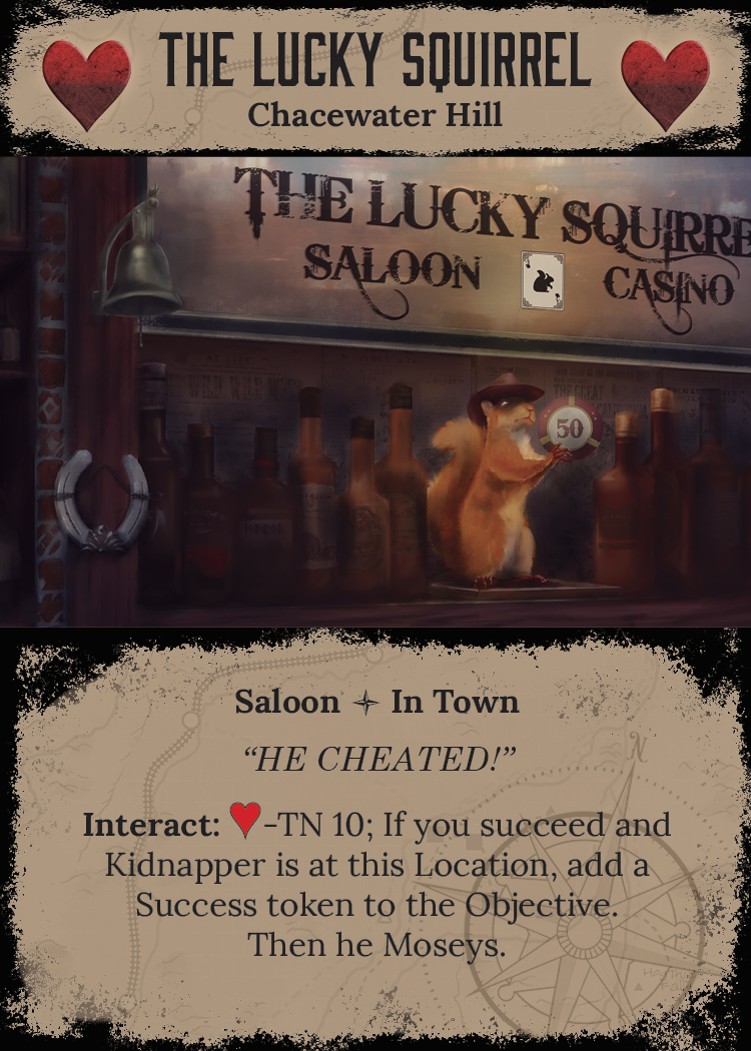
When I picture a Western, I often imagine grizzled gunslingers sitting around a saloon table, playing poker. There is something about waiting for a card to turn over when the stakes are high that feels right at home in Deadlands. That feeling became one of the starting points for Deadlands: Legends of the Weird West.
I’m John Urbanek, the game’s lead designer. I’ve been playing card games for decades, and cooperative campaign games such as Arkham Horror: The Card Game, Gloomhaven, and Vagrantsong got me thinking about telling a Deadlands story through cards. Working with my co-designer, Collin Weir, I wanted to bring the adventures of the Weird West into that space.
A 54-card poker deck was an early part of the design. I wanted the anticipation of revealing a card to be part of taking action: committing to a plan, hoping fate would cooperate, and discovering what happened next. The deck gave us a way to connect that feeling to the setting.
But the cards also needed to help us tell a story. Deadlands gives us a world where card-slinging wizards can fight alongside a shotgun-wielding nun as they stare down a pack of wendigos. That combination of Western adventure and supernatural horror gives us plenty to work with.
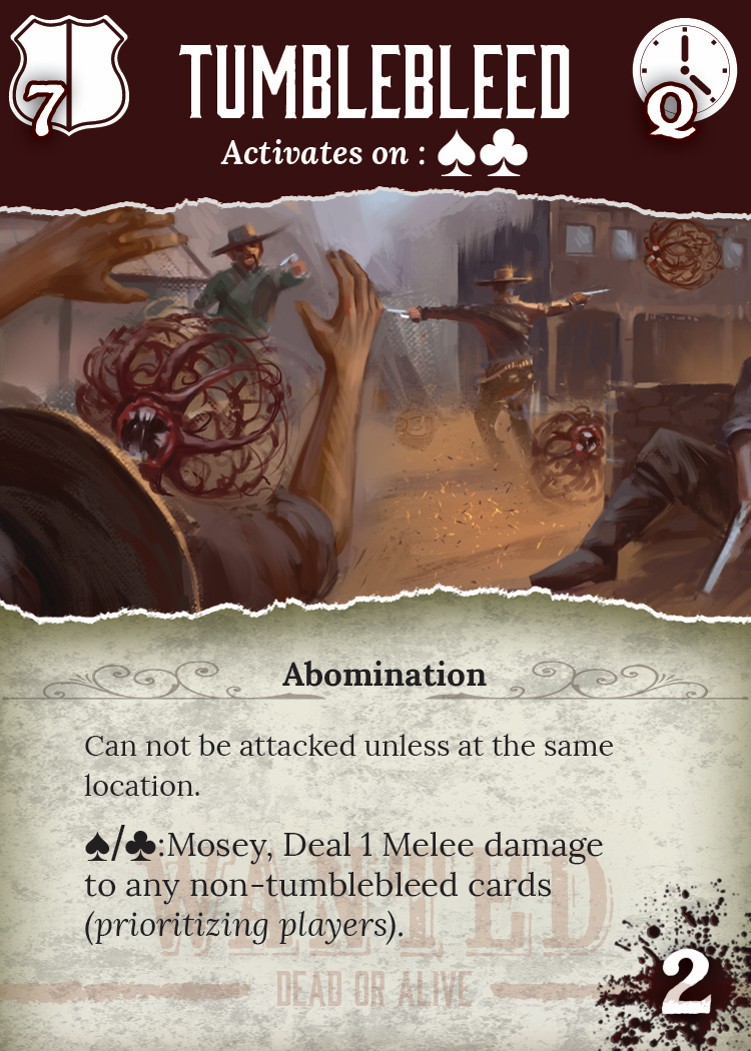
Just as important to me are the stories my friends and I create together while playing. We remember the unexpected moments: an enemy snake left at camp to guard our gear, or a tumble bleed coming toward us with a knife. Those are the kinds of strange, memorable situations I want Legends to make room for alongside its campaign narrative.
That goal brings us to the mechanics. How do we give characters their own identities and approaches while letting their adventures unfold through cards?
Collin Weir on Characters and the Four Suits
Like John, I’ve spent a lot of time playing these games. I’ve always enjoyed digging into their rules to understand how everything fits together. For Legends, our challenge is to translate the experience of a Deadlands roleplaying adventure into a cooperative card game.
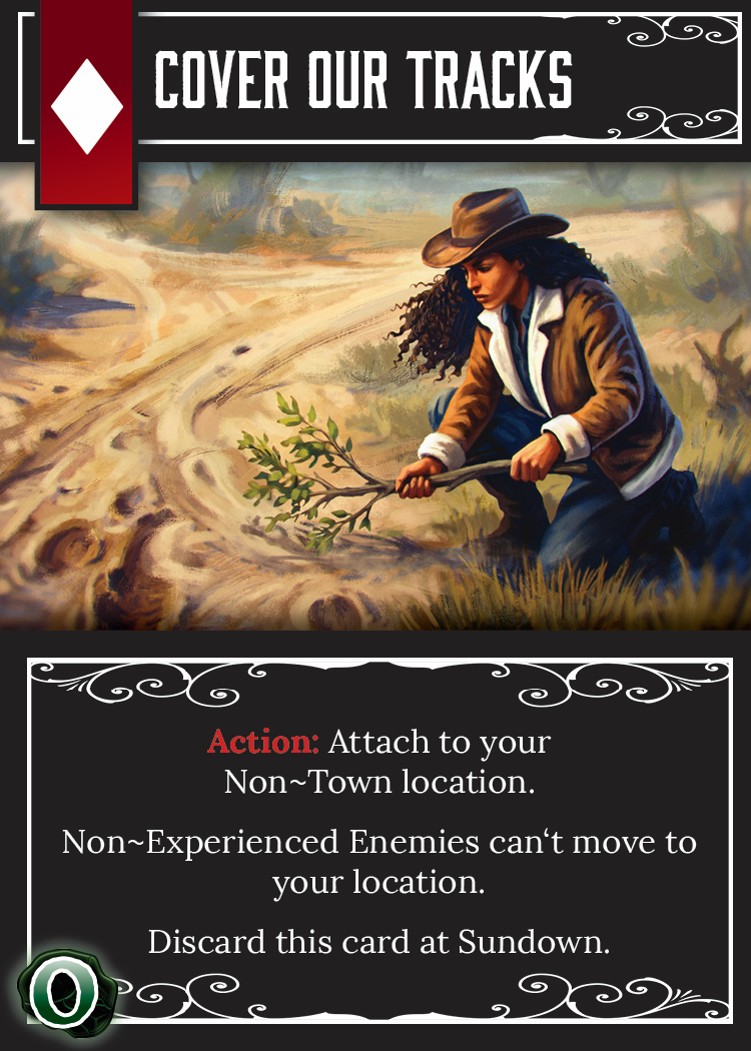
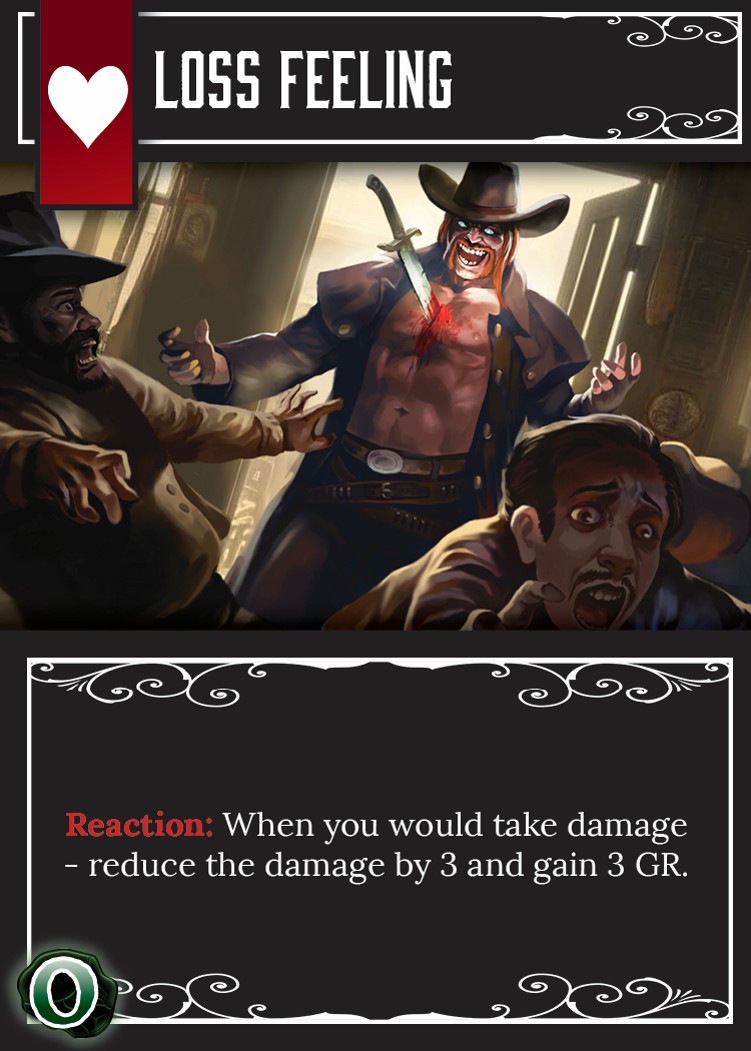
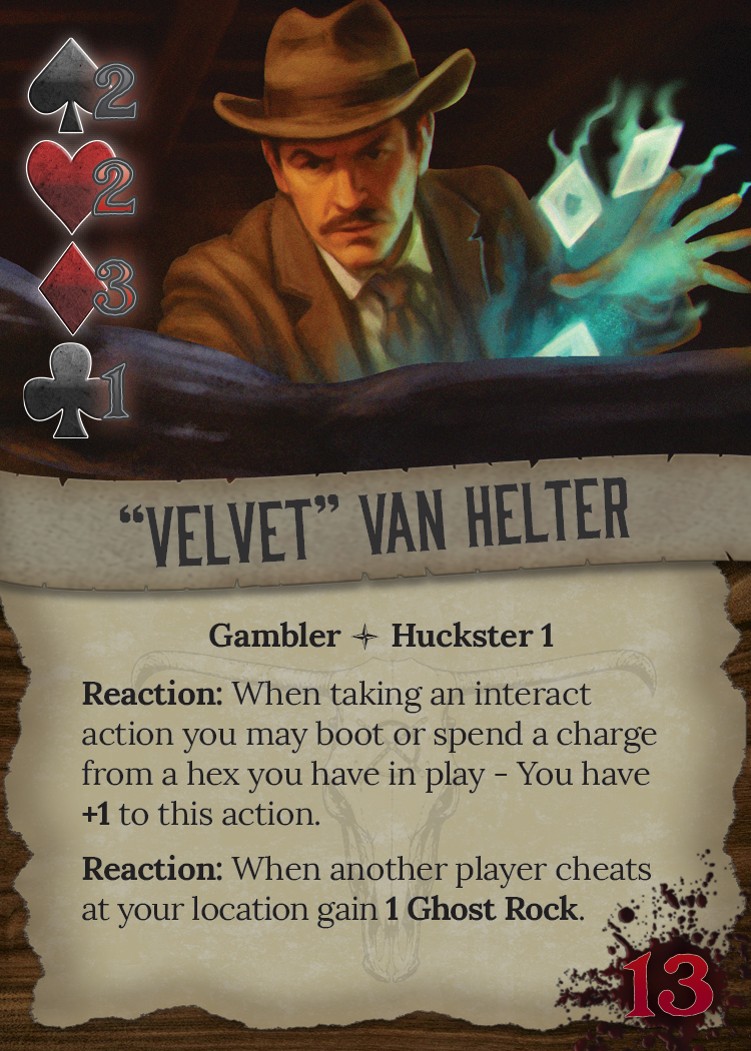
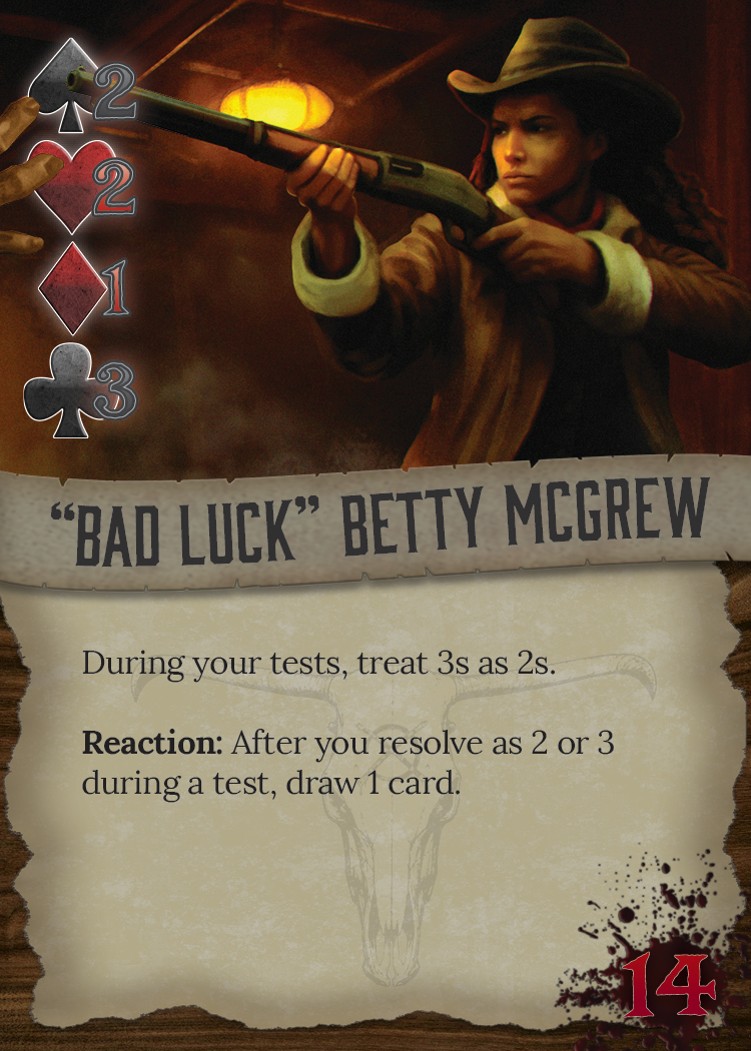
Each player takes on a single character, with cards representing that character’s background and skills. The character’s identity also comes through in four attributes, each associated with a poker suit (Clubs, Diamonds, Hearts, Spades). We organized these around how characters approach the situations they encounter.
Spades represent a direct, often confrontational approach. That can mean attacking an enemy, but it can also mean being forthright in a conversation.
Hearts represent flexibility and adaptability, from instinctively avoiding danger to charming the local sheriff into sharing a helpful piece of information.
Diamonds represent planning and precision. The deliberate aim of a long-range rifle and the application of carefully studied knowledge both fit here.
Clubs represent resilience: standing firm against a mighty blow or the creeping fear of facing a monstrous enemy.
Thinking about the suits this way lets us express a character’s personality across different situations. A direct approach can matter in a conversation as well as a fight; precision can describe both marksmanship and knowledge.
Putting those approaches into play
Each character has poker chips in the four suits, with the quantities reflecting how they tend to act. Ronan’s highest value is spades: he tends to go directly at—and sometimes through—the problem. Betty’s highest value is clubs, reflecting her refusal to be deterred by hardship.
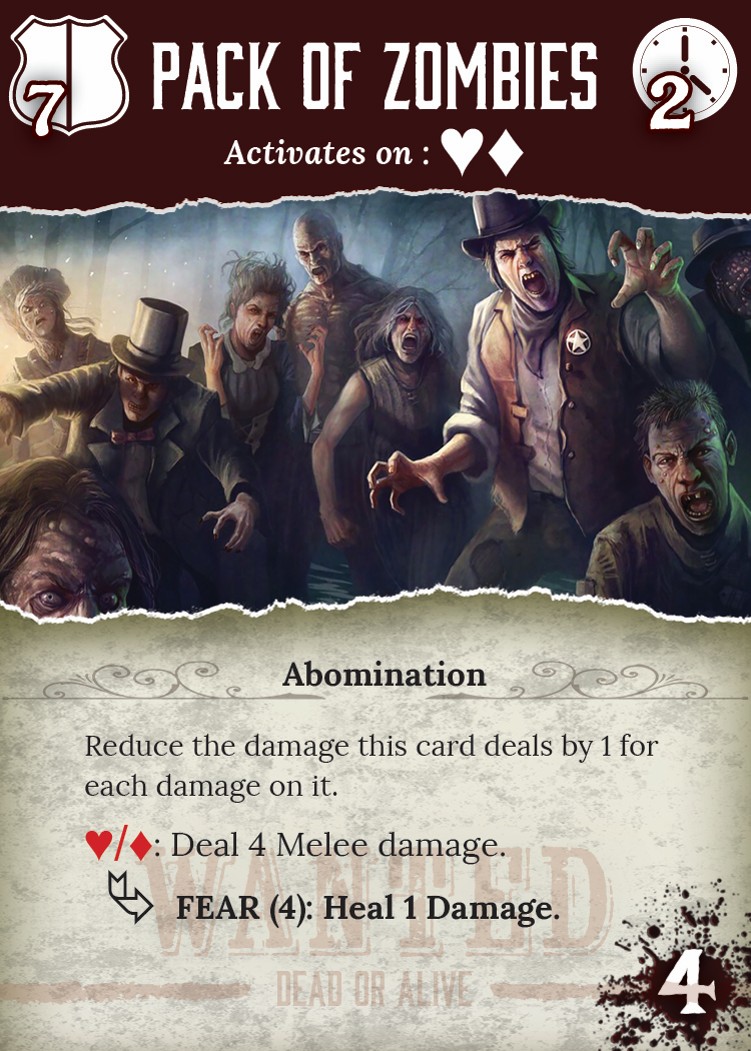
Players spend these chips to take actions, such as spending spades to fight a zombie or hearts to talk down a group of rowdy drunks. Actions are resolved by revealing cards from the poker deck and comparing them with a target number to determine success.
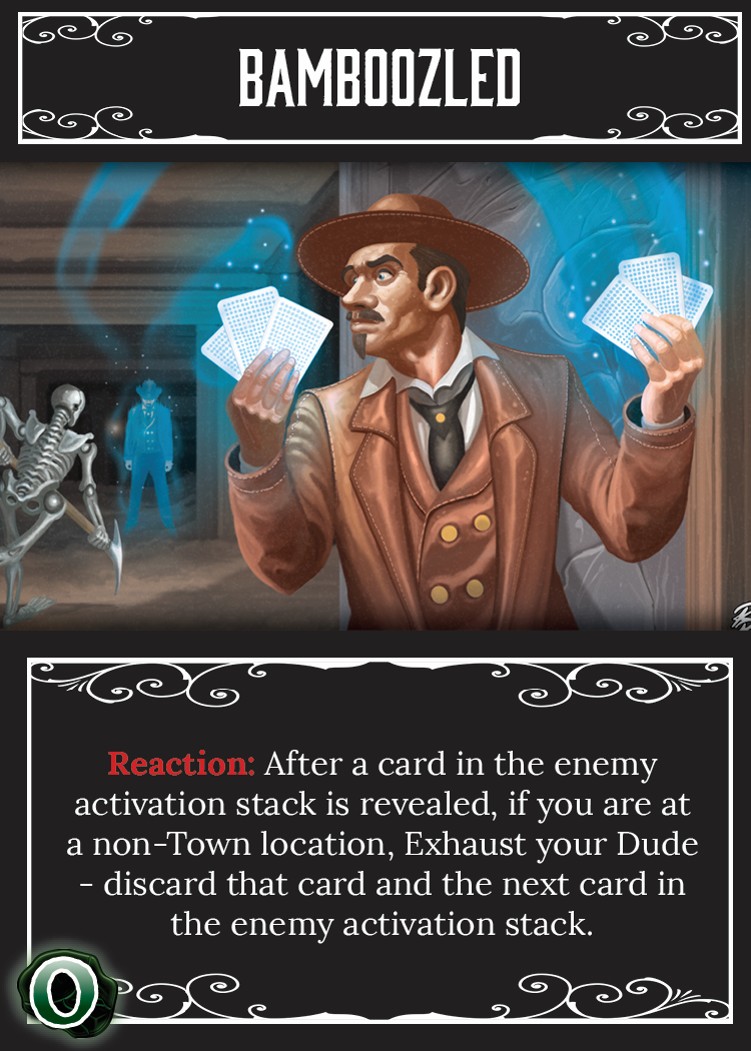
Taking an action also adds a card to the enemy pile, which determines enemy behavior. The pile is checked after each player’s turn. This creates a back-and-forth rhythm between the players and their opponents, with the poker deck helping resolve both the posse’s efforts and the dangers they face.
A Campaign that Changes Your Characters
Each campaign is made up of individual scenarios, with their own locations, objectives, and stories. Decisions and outcomes can have consequences in later scenarios, connecting each adventure to the wider campaign.
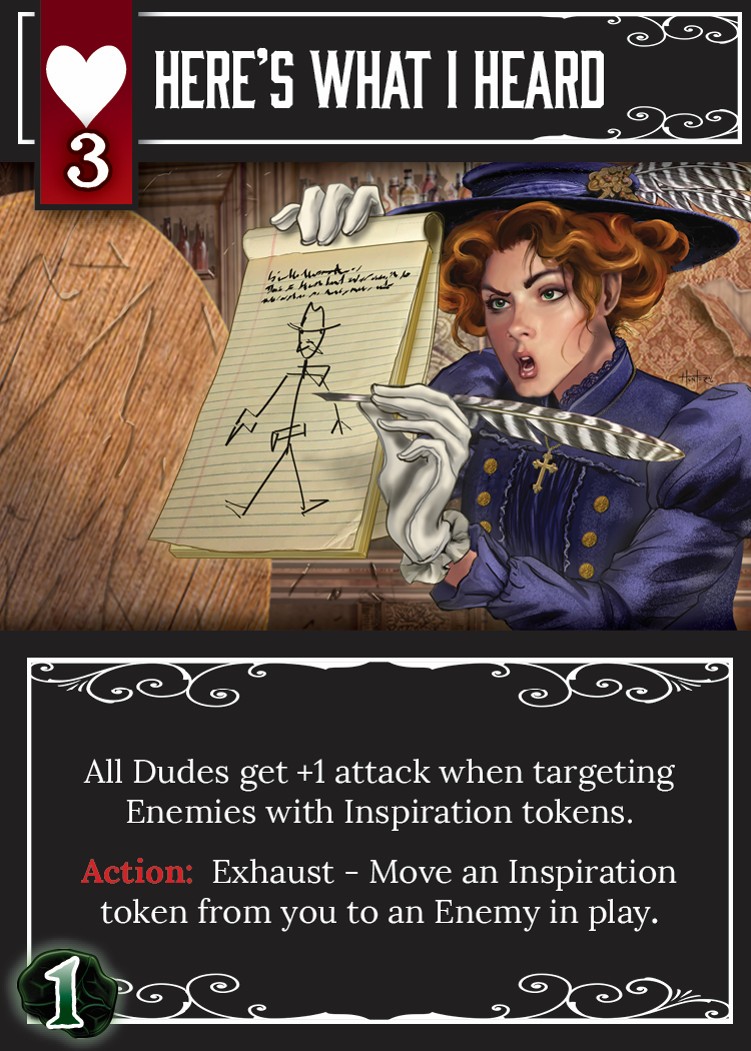
Between scenarios, players can update their decks and may have the opportunity to level up their characters. Advancement brings new character abilities, access to new cards, and upgraded versions of existing cards. These breaks also provide a natural place to pause a campaign between sessions.
For us, that progression is part of the storytelling. The campaign follows what is happening in the Weird West, while each character’s changing abilities and deck reflect their own journey through it.
Our initial campaign begins with an invitation from an old friend, one familiar to those who know the Deadlands lore. When the posse arrives in town, that friend has disappeared. Finding out what happened draws the characters into the darker events unfolding behind the scenes.
That is the experience we’re working toward: a Deadlands adventure whose story develops through your decisions, whose characters grow along the way, and whose unexpected moments give your group something to talk about long after the cards are put away.
Launching in Q1 2027, follow here and prepare to ante up!